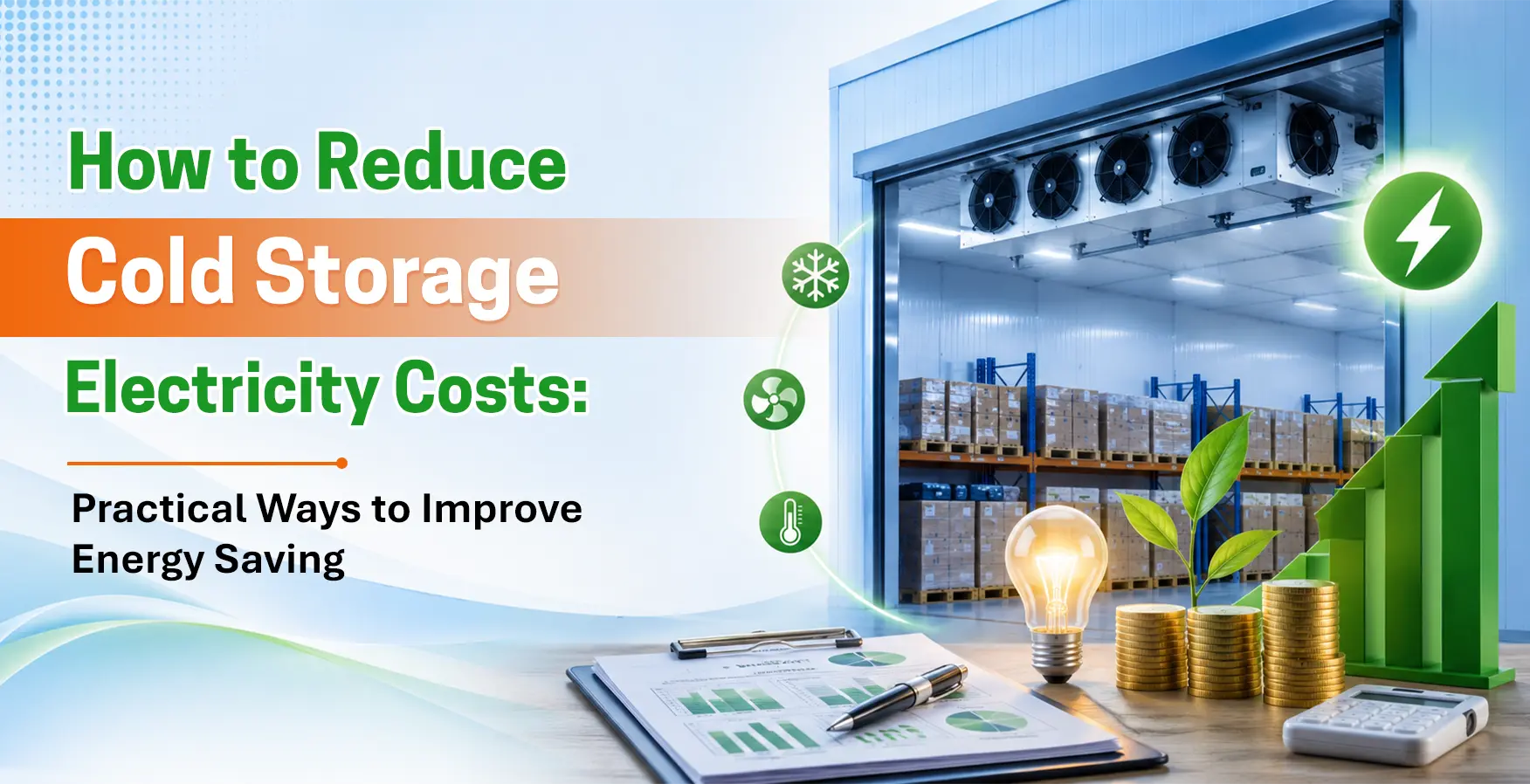
How to Reduce Cold Storage Electricity Costs : Practical Ways to Improve Energy Saving
Table of Contents
Introduction
Understand Where the Electricity Goes
1. Keep Cold Air Inside the Cold Storage
2. Improve Insulation
3. Maintain the Refrigeration System Regularly
4. Use Energy-Efficient Refrigeration Technology
5. Avoid Overcooling
6. Use Smart Monitoring Systems
7. Reduce Heat Entering the Facility
8. Consider Natural Refrigerants
Small Improvements Create Big Savings
Think Beyond This Month's Electricity Bill
Final Thoughts
Introduction
The Bill That Every Cold Storage Owner Fears
Imagine this.
At the end of the month, you open your electricity bill.
Before you even look at the number, you already know it's going to hurt.
You start doing the math in your head like:
Storage income is this much…
Staff expenses are this much…
Maintenance costs are this much…
And then comes the electricity bill.
For many cold storage owners, it is the single largest operating expense.
The truth is simple:
A cold storage never sleeps.
Whether it's day or night, summer or winter, the cooling system keeps running to protect the products stored inside.
That's why many business owners ask the same question:
"How can I reduce electricity costs without compromising cooling performance?"
The good news is that lowering electricity usage is often possible without sacrificing product quality.
-
Understand Where the Electricity Goes
-
1. Keep Cold Air Inside the Cold Storage
-
2. Improve Insulation
-
3. Maintain the Refrigeration System Regularly
-
4. Use Energy-Efficient Refrigeration Technology
-
5. Avoid Overcooling
-
6. Use Smart Monitoring Systems
-
7. Reduce Heat Entering the Facility
-
8. Consider Natural Refrigerants
-
Small Improvements Create Big Savings
-
Think Beyond This Month's Electricity Bill
Let's look at some practical ways.
Understand Where the Electricity Goes
Many people think cold storages consume electricity only because of compressors.
But in reality, power is used by:
-
Refrigeration systems
-
Condensers
-
Evaporators
-
Fans
-
Pumps
-
Lighting
-
Control systems
When all these run continuously, even small inefficiencies can create large electricity bills.
Reducing costs starts with understanding where energy is being consumed.
1. Keep Cold Air Inside the Cold Storage
This sounds obvious, but it is one of the biggest reasons for energy loss.
Imagine trying to cool your home while keeping the main door open.
The air conditioner would keep working harder and harder.
The same thing happens in cold storage.
Every time warm air enters:
-
Compressors work harder
-
Cooling systems run longer
-
Electricity usage increases
Simple habits can help:
-
Keep doors closed whenever possible
-
Reduce unnecessary door opening
-
Use proper insulated doors
-
Maintain door seals regularly
Sometimes the easiest savings come from preventing cold air from escaping.
2. Improve Insulation
A cold storage is only as good as its insulation.
Poor insulation is like filling a bucket that has holes in it.
No matter how much cooling you produce, some of it keeps escaping.
Good-quality insulated panels, roofing, and doors help keep temperatures stable.
Better insulation means:
-
Less cooling loss
-
Less compressor running time
-
Over the life of a cold storage, insulation often pays for itself many times over.
3. Maintain the Refrigeration System Regularly
Many operators wait until something breaks.
Unfortunately, by then the system may already be wasting energy.
Dirty condensers, blocked coils, refrigerant issues, and poorly maintained equipment can force the system to work much harder than necessary.
Regular maintenance helps ensure:
-
Better cooling performance
-
Lower power usage
-
Fewer unexpected breakdowns
Think of it like servicing a vehicle.
A well-maintained machine usually runs more efficiently.
4. Use Energy-Efficient Refrigeration Technology
Not all refrigeration systems consume the same amount of electricity.
Older systems often require more energy to achieve the same cooling effect.
Modern refrigeration technologies are designed to improve efficiency while maintaining reliable cooling.
Many businesses upgrading their facilities are exploring:
-
High-efficiency compressors
-
Advanced control systems
-
Natural refrigerants
-
CO2 refrigeration systems
The goal is simple:
Produce more cooling while using less energy.
5. Avoid Overcooling
Many cold storage operators believe lower temperatures automatically mean better storage.
But that's not always true.
Every product has an ideal storage temperature.
Cooling below what is actually required can increase electricity usage unnecessarily.
For example:
If a product needs a temperature of 2°C, maintaining it at -2°C only increases energy usage without providing additional benefits.
The key is maintaining the right temperature - not the lowest possible temperature.
6. Use Smart Monitoring Systems
You cannot improve what you do not measure.
Modern monitoring systems allow operators to track:
-
Temperature
-
Humidity
-
Equipment performance
-
Energy usage
This helps identify issues before they become expensive problems.
Small adjustments made early can prevent large electricity losses later.
7. Reduce Heat Entering the Facility
Every bit of heat entering the cold storage must be removed by the refrigeration system.
That removal requires electricity.
Heat can enter through:
-
Frequent door openings
-
Poor insulation
-
Direct sunlight
-
Damaged panels
-
Warm products entering storage
Reducing heat gain means the refrigeration system has less work to do.
And less work usually means lower power usage.
8. Think about Natural Refrigerants
Around the world, many industries are exploring natural refrigerants as part of their long-term energy and sustainability strategy.
One of the most talked-about options today is CO2 refrigeration.
Why?
Because modern CO2 systems are being designed to provide strong cooling performance while supporting future-ready refrigeration infrastructure.
For businesses planning long-term investments, natural refrigerants are becoming an important part of the conversation.
Small Improvements Create Big Savings
Many people look for one magic solution.
In reality, electricity savings usually come from several small improvements working together.
Maybe better insulation saves a little.
Better maintenance saves a little.
Smarter controls save a little.
Reduced door openings save a little.
But when combined, the results can become significant.
Over months and years, these savings can make a major difference to operating costs.
Think Beyond This Month's Electricity Bill
The most successful cold storage operators don't only focus on today's electricity bill.
They think about:
-
Energy efficiency
-
Long-term operating costs
-
Future expansion
-
Reliability
-
Sustainability
Every decision made today affects operating expenses for years to come.
That's why investing in efficient refrigeration systems, proper insulation, and modern cooling technologies is often one of the smartest business decisions a cold storage owner can make.
Final Thoughts
Electricity costs are one of the biggest challenges in the cold storage industry.
While no cold storage can eliminate power usage, many facilities can reduce unnecessary energy usage through better design, proper maintenance, efficient operations, and modern refrigeration technologies.
The goal isn't just to use less electricity.
The goal is to get the maximum cooling performance from every unit of energy consumed.
Because in the cold storage business, saving energy often means improving profitability.
Ready to Improve Your Cold Storage Efficiency?
Whether you're building a new facility or upgrading an existing one, Nandi Koti helps businesses explore modern refrigeration solutions designed for efficiency, reliability, and long-term performance.
Talk to our experts today to discover smarter ways to reduce operating costs and improve cooling efficiency.
📞Talk to an expert
Contact Us: +91 9426444495 | +91 9624121156
Email: [email protected]
Table of Contents
Introduction
Understand Where the Electricity Goes
1. Keep Cold Air Inside the Cold Storage
2. Improve Insulation
3. Maintain the Refrigeration System Regularly
4. Use Energy-Efficient Refrigeration Technology
5. Avoid Overcooling
6. Use Smart Monitoring Systems
7. Reduce Heat Entering the Facility
8. Consider Natural Refrigerants
Small Improvements Create Big Savings
Think Beyond This Month's Electricity Bill
Final Thoughts
Introduction
The Bill That Every Cold Storage Owner Fears
Imagine this.
At the end of the month, you open your electricity bill.
Before you even look at the number, you already know it's going to hurt.
You start doing the math in your head like:
Storage income is this much…
Staff expenses are this much…
Maintenance costs are this much…
And then comes the electricity bill.
For many cold storage owners, it is the single largest operating expense.
The truth is simple:
A cold storage never sleeps.
Whether it's day or night, summer or winter, the cooling system keeps running to protect the products stored inside.
That's why many business owners ask the same question:
"How can I reduce electricity costs without compromising cooling performance?"
The good news is that lowering electricity usage is often possible without sacrificing product quality.
-
Understand Where the Electricity Goes
-
1. Keep Cold Air Inside the Cold Storage
-
2. Improve Insulation
-
3. Maintain the Refrigeration System Regularly
-
4. Use Energy-Efficient Refrigeration Technology
-
5. Avoid Overcooling
-
6. Use Smart Monitoring Systems
-
7. Reduce Heat Entering the Facility
-
8. Consider Natural Refrigerants
-
Small Improvements Create Big Savings
-
Think Beyond This Month's Electricity Bill
Let's look at some practical ways.
Understand Where the Electricity Goes
Many people think cold storages consume electricity only because of compressors.
But in reality, power is used by:
-
Refrigeration systems
-
Condensers
-
Evaporators
-
Fans
-
Pumps
-
Lighting
-
Control systems
When all these run continuously, even small inefficiencies can create large electricity bills.
Reducing costs starts with understanding where energy is being consumed.
1. Keep Cold Air Inside the Cold Storage
This sounds obvious, but it is one of the biggest reasons for energy loss.
Imagine trying to cool your home while keeping the main door open.
The air conditioner would keep working harder and harder.
The same thing happens in cold storage.
Every time warm air enters:
-
Compressors work harder
-
Cooling systems run longer
-
Electricity usage increases
Simple habits can help:
-
Keep doors closed whenever possible
-
Reduce unnecessary door opening
-
Use proper insulated doors
-
Maintain door seals regularly
Sometimes the easiest savings come from preventing cold air from escaping.
2. Improve Insulation
A cold storage is only as good as its insulation.
Poor insulation is like filling a bucket that has holes in it.
No matter how much cooling you produce, some of it keeps escaping.
Good-quality insulated panels, roofing, and doors help keep temperatures stable.
Better insulation means:
-
Less cooling loss
-
Less compressor running time
Over the life of a cold storage, insulation often pays for itself many times over.
3. Maintain the Refrigeration System Regularly
Many operators wait until something breaks.
Unfortunately, by then the system may already be wasting energy.
Dirty condensers, blocked coils, refrigerant issues, and poorly maintained equipment can force the system to work much harder than necessary.
Regular maintenance helps ensure:
-
Better cooling performance
-
Lower power usage
-
Fewer unexpected breakdowns
Think of it like servicing a vehicle.
A well-maintained machine usually runs more efficiently.
4. Use Energy-Efficient Refrigeration Technology
Not all refrigeration systems consume the same amount of electricity.
Older systems often require more energy to achieve the same cooling effect.
Modern refrigeration technologies are designed to improve efficiency while maintaining reliable cooling.
Many businesses upgrading their facilities are exploring:
-
High-efficiency compressors
-
Advanced control systems
-
Natural refrigerants
-
CO2 refrigeration systems
The goal is simple:
Produce more cooling while using less energy.
5. Avoid Overcooling
Many cold storage operators believe lower temperatures automatically mean better storage.
But that's not always true.
Every product has an ideal storage temperature.
Cooling below what is actually required can increase electricity usage unnecessarily.
For example:
If a product needs a temperature of 2°C, maintaining it at -2°C only increases energy usage without providing additional benefits.
The key is maintaining the right temperature - not the lowest possible temperature.
6. Use Smart Monitoring Systems
You cannot improve what you do not measure.
Modern monitoring systems allow operators to track:
-
Temperature
-
Humidity
-
Equipment performance
-
Energy usage
This helps identify issues before they become expensive problems.
Small adjustments made early can prevent large electricity losses later.
7. Reduce Heat Entering the Facility
Every bit of heat entering the cold storage must be removed by the refrigeration system.
That removal requires electricity.
Heat can enter through:
-
Frequent door openings
-
Poor insulation
-
Direct sunlight
-
Damaged panels
-
Warm products entering storage
Reducing heat gain means the refrigeration system has less work to do.
And less work usually means lower power usage.
8. Think about Natural Refrigerants
Around the world, many industries are exploring natural refrigerants as part of their long-term energy and sustainability strategy.
One of the most talked-about options today is CO2 refrigeration.
Why?
Because modern CO2 systems are being designed to provide strong cooling performance while supporting future-ready refrigeration infrastructure.
For businesses planning long-term investments, natural refrigerants are becoming an important part of the conversation.
Small Improvements Create Big Savings
Many people look for one magic solution.
In reality, electricity savings usually come from several small improvements working together.
Maybe better insulation saves a little.
Better maintenance saves a little.
Smarter controls save a little.
Reduced door openings save a little.
But when combined, the results can become significant.
Over months and years, these savings can make a major difference to operating costs.
Think Beyond This Month's Electricity Bill
The most successful cold storage operators don't only focus on today's electricity bill.
They think about:
-
Energy efficiency
-
Long-term operating costs
-
Future expansion
-
Reliability
-
Sustainability
Every decision made today affects operating expenses for years to come.
That's why investing in efficient refrigeration systems, proper insulation, and modern cooling technologies is often one of the smartest business decisions a cold storage owner can make.
Final Thoughts
Electricity costs are one of the biggest challenges in the cold storage industry.
While no cold storage can eliminate power usage, many facilities can reduce unnecessary energy usage through better design, proper maintenance, efficient operations, and modern refrigeration technologies.
The goal isn't just to use less electricity.
The goal is to get the maximum cooling performance from every unit of energy consumed.
Because in the cold storage business, saving energy often means improving profitability.
Ready to Improve Your Cold Storage Efficiency?
Whether you're building a new facility or upgrading an existing one, Nandi Koti helps businesses explore modern refrigeration solutions designed for efficiency, reliability, and long-term performance.
Talk to our experts today to discover smarter ways to reduce operating costs and improve cooling efficiency.
📞Talk to an expert
Contact Us: +91 9426444495 | +91 9624121156
Email: [email protected]